
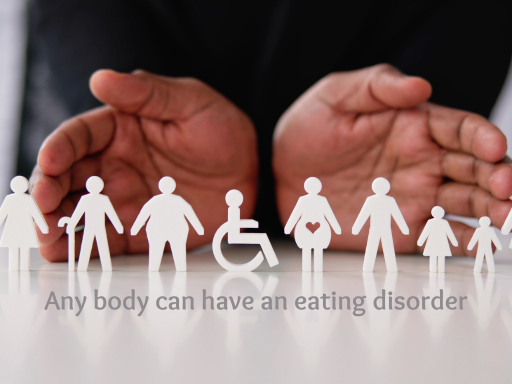
Weight stigma is very prevalent in today’s society, affecting people’s perception of health and negatively impacting the mental health of many. Most of us have either experienced being treated differently based on our weight, seen it portrayed in books or movies, or heard others describe it through social media. While weight stigma makes day-to-day life challenging, it makes advocating for yourself in the healthcare system even more challenging.
Now imagine you are battling with anorexia, the deadliest mental disorder, but get dismissed by health care professionals and others because you are a “normal weight” or overweight. Not only are these individuals often treated differently in the health care system, but they are also diagnosed differently.
Anorexia is an eating disorder categorized by an “intense fear of weight gain and extreme restriction of food and energy” (Warme, 2022). Atypical anorexia is the diagnosis given by doctors to those who have all the same symptoms as someone battling with anorexia; the only differentiating factor is that these individuals are not physically underweight. The health consequences for both atypical anorexia and anorexia are the same, and someone being at a “normal weight” or overweight does not make the outcomes of this disorder any less dangerous.
Atypical anorexia is listed under the OSFED division of eating disorders, which stands for “Other specific feeding and eating disorders”. This terminology is harmful to those with atypical anorexia seeking needed medical attention because insurance does not usually cover disorders considered OSFED, as they are deemed as less of a priority than the main categories of eating disorders, such as anorexia. Having a subcategory of anorexia for individuals who need the same level of care as someone diagnosed with anorexia is a result of weight stigma, causing people to be overlooked and diminished.
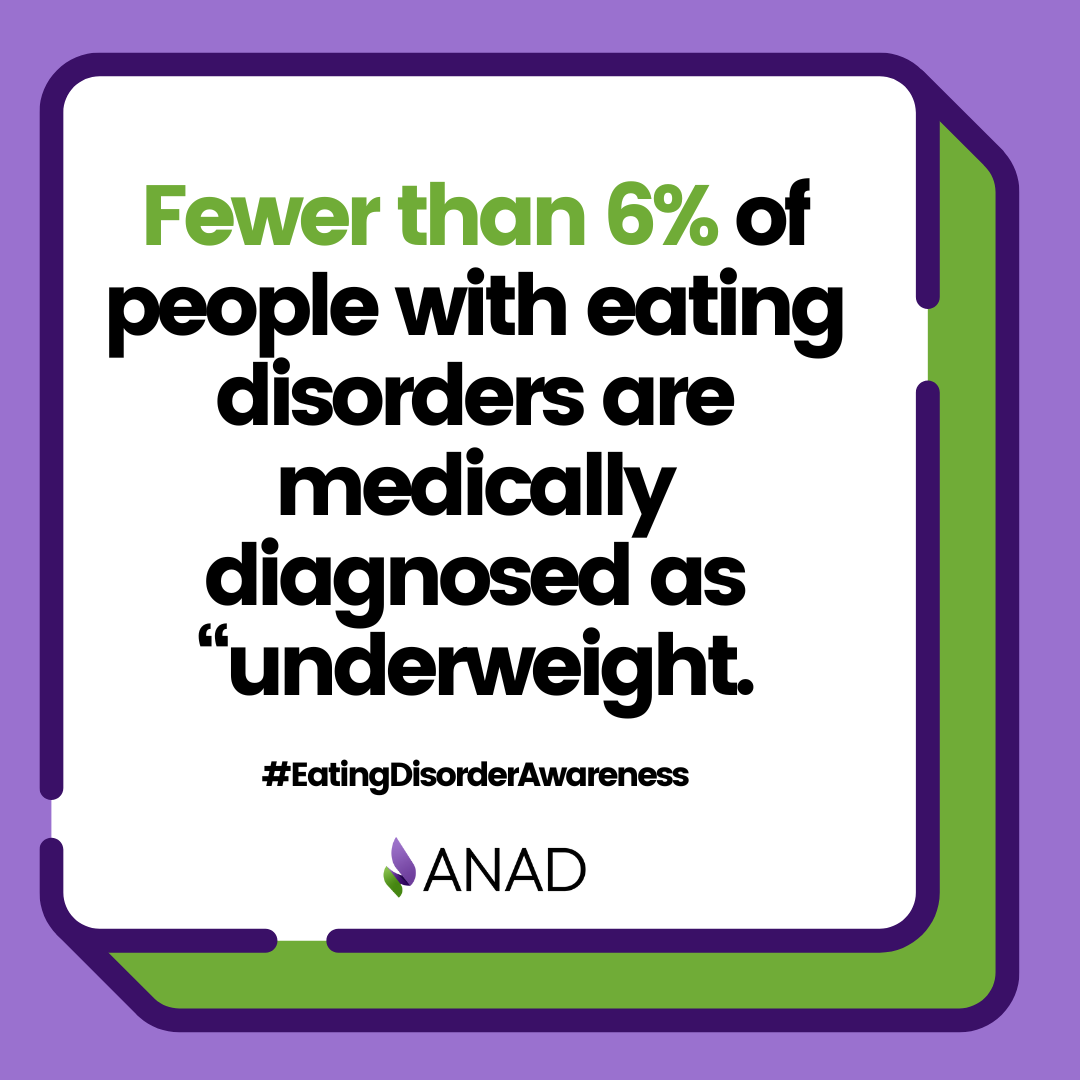
The word “atypical” implies that it is not normal, although data indicate that the prevalence of atypical anorexia is 2-100 times higher than that of anorexia (Gaudiani, 2023). Dr. Gaudiani, who founded Denver ACUTE, an eating disorder and severe malnutrition medical stabilization program in Colorado, makes the interesting argument that it is, in fact, not normal to be underweight as a result of extreme dieting or restriction, as seen by patients who attempt to lose significant amounts of weight and end up gaining the weight back or gaining an increased amount of weight. This biological response is a result of our bodies protecting themselves from the threat of malnutrition. She goes as far as to say that those who are underweight are really the ones “defying biology,” and then proceeds to question why the word “atypical” is used to diagnose those who are not underweight. “Fewer than 6% of people with eating disorders are medically diagnosed as “underweight.”7, 16. In fact, people in larger bodies are at the highest risk of having developed an eating disorder in their lives, and among people in larger bodies, the higher the BMI, the higher the risk.60, 59” (ANAD)
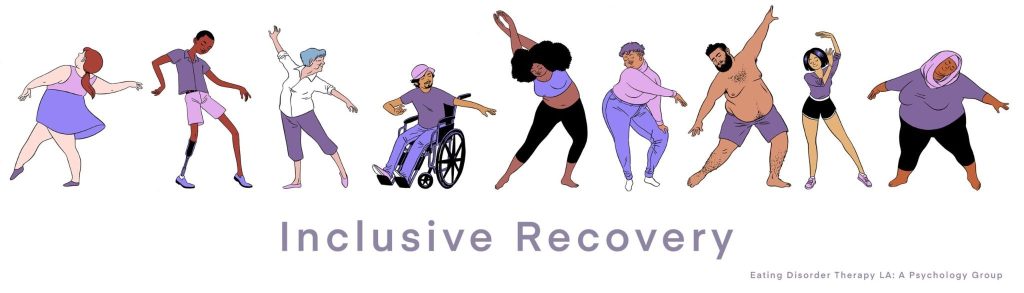
Source: Eating Disorders LA: A Psychology Group
Medical Implications and Risks
The lack of advocacy for atypical anorexia is an even greater concern when looking at the life-threatening health issues that come as a result. While being dismissed by doctors and insurance companies, individuals diagnosed with atypical anorexia are at risk for a slew of both medical and psychological implications, including low bone mineral density often leading to osteoporosis, amenorrhea (loss of menstrual cycle) and other hormonal dysfunction, nutritional deficiencies, cardiovascular concerns such as low heart rate and/or blood pressure, hair thinning or loss, gastrointestinal problems, and increased mental health conditions such as anxiety or depression (Warme, 2022).
Dr. Elizabeth Wasanar, the regional medical doctor for the Eating Recovery Center, makes the claim that just because someone is not underweight doesn’t mean they aren’t weight suppressed. Weight suppression measures the difference between someone’s highest weight in adulthood and their current weight. Just because someone’s weight or BMI according to universal measurements doesn’t indicate they are underweight; it doesn’t mean they are not at an unhealthy or lower weight than what their body requires to carry out proper biological functions. Weight suppression, often associated with atypical anorexia, is a major factor influencing medical and psychological implications.
Dr. Gauduani describes just how not-so-atypical anorexia is by describing various studies proving just how common and serious the medical dangers are for individuals with the disorder in comparison to those diagnosed with anorexia. She highlights the statistics showing the correlation between the severity of various consequences for both anorexia and atypical anorexia. The findings indicate that symptoms, including a slowed heart rate, a sudden drop in blood pressure, unregulated body temperature, and signs of chronic illness, were similar across the two diagnoses. Dr. Gaudiani also shares data that the need for hospitalization and individuals having psychological implications, such as suicidal patterns, as a result of the disorders was the same for both (Gaudiani, 2023).
The medical differences between anorexia and atypical anorexia are seen through measurements of psychological suffering, bone density, and hypoglycemia. The psychological implications of those battling both disorders were measured using questionnaires, and found that those diagnosed with atypical anorexia had a higher prevalence of anxiety, depression, and an increased mental struggle around body image. Those with anorexia, compared to those diagnosed with atypical anorexia, showed a higher risk of low bone density, often resulting in osteoporosis, and hypoglycemia. This can be attributed to the fact that individuals who have anorexia but live in larger bodies hold onto fat and muscle stores as a means to protect themselves against being unable to process glucose to be used as energy (Gaudiani, 2023). As mentioned earlier, this is a common biological response seen throughout history and is clear evidence proving that atypical anorexia is not-so-atypical.
Advocating for individuals who are in larger bodies but seeking medical help, therapy, or nutritional advice for anorexia symptoms is pertinent to their health and for preventing life-threatening health issues. Later in this post, I will share ways in which you can advocate for yourself if diagnosed with atypical anorexia, as shared by Joanna Nolen, who struggled with this deadly disorder.
The Importance of Advocating
Joanna Nolen describes her struggle beyond the medical and psychological consequences of battling atypical anorexia and brings awareness by providing others with tools to advocate for themselves. Nolen conquered one of the most challenging steps towards recovery by asking for and seeking help for herself, but was met with pushback by those whom she had depended on to support her. She ran into anti-fatness within the medical system as it’s weight-centric focused, trouble getting support from insurance, and negative assumptions from peers.
A major problem that needs to be brought to greater attention is the lack of Insurance for those with atypical anorexia. Society has already proven to make life more challenging for those living in larger bodies. It is no wonder that many individuals battling atypical anorexia are less likely to get help compared to those with anorexia when multiple obstacles are preventing them. Dr. Elizabeth Wasanar, the regional medical doctor for Eating Recovery Center, attributes the struggle of those with atypical anorexia in getting medical attention to weight stigma as a result of diet culture (Nolen, 2023).
Nolen explains the unfortunate reality that she and many others with atypical anorexia are met with. Insurance companies do not provide financial support for this disorder, and therefore, many individuals are unable to afford the cost of necessary treatment. She attributes this to the fact that atypical anorexia is listed under OSFED, standing for “Other Specified Feeding or Eating Disorder”. This classification leads to the mental disorder being overlooked and undermined, despite being just as deadly as other, more acknowledged disorders. Nolen emphasizes how invalidated she has made her feel throughout her fight for recovery, as the healthcare system has made her feel as if she is “not sick enough” (Nolen, 2023). With data clearly indicating that the medical and psychological consequences of anorexia for those in smaller and larger bodies are the same, why is treatment for one prioritized over the other?
In a world where it is a battle to gain others’ advocacy, it is pertinent that we advocate for ourselves. Joanna Nolen gives specific examples of ways that she advocated for herself while battling atypical anorexia and encourages others to do the same as they feel aligns with their individual recovery journey.
- Research doctors before choosing them.
- Be particular when seeking a doctor who will stand beside you in fighting for recovery. Nolen specifically did this by reading reviews from others and listening to suggestions given to her by people in her same struggle.
- Set clear boundaries with family and friends.
- Despite good intentions, friends and family can be notorious for saying things that could be very harmful to individuals dealing with heightened distress about body image and food. Making people close to you aware of triggering words and actions can prevent anybody from saying or doing something that could set you back. For example, Joanna Nolen pointed out to her friends and family that commenting on her weight, even if positive and intended as praise, was harmful.
- Focus on your treatment goals and what recovery looks like for you
- Comparison fuels negative self-judgment and is detrimental to ED recovery. No one’s journey is a linear process and it looks different for everyone. It is pertinent to focus on your individual journey. While learning from others is helpful, understand that you know yourself best and what ultimately will work for you. Nobody will recover the same way or at the same pace. Celebrate your own successes and make an effort to block out people who undermine them.

Image Source: Magnific
Wrapping it Up
Atypical anorexia is a life-threatening disorder that needs more attention. In a society fueled by diet culture, understanding the science proving the severity of the diagnosis is crucial to advocacy. Weight stigma is frustrating and exhausting when seeking medical and financial support in a larger body. The medical and psychological complications related to atypical anorexia (lowered blood pressure and heart rate, increased anxiety and depression, gastrointestinal problems, hormonal dysfunction, and various nutritional deficiencies) need to be taken seriously. Atypical anorexia is complex but far from atypical, and in actuality, as seen through the studies and data described above, very normal. Nobody should feel confined to a life led by anxiety around food and body image. Everybody, no matter the size of their body, deserves to live a life recovered from their eating disorder.
Sources
Eating Disorder Statistics https://anad.org/learning-library/eating-disorder-statistic/
Gaudiani, J. (2023, October 13). “Atypical” Anorexia Nervosa. Gaudiani Clinic. https://www.gaudianiclinic.com/gaudiani-clinic-blog/2023/10/12/atypical-anorexia-nervosa
Nolen, J. (2023, January 26). Anorexia in Diverse Bodies: Nothing Atypical About It. YouTube. https://www.youtube.com/watch?v=nJTJkrwJPJ4
Warme, A. (2023, April 26). Atypical anorexia nervosa – not so atypical?. Kendall Reagan Nutrition Center. https://bit.ly/42B1RkD

