
Principle 3 of Intuitive Eating is “Make Peace with Food”. Tribole and Resch discuss the psychological implications of restriction as it leads to a vicious and mind-consuming cycle of overeating or binging as a result. This concept, as described in the book, is labelled as “Last Supper eating,” which is the mentality that stems from depriving oneself of a certain food 2. When they are then presented with that food and permit themselves to eat what would normally be forbidden, they take on an all-or-nothing mindset, resulting in eating it past the point of comfort.
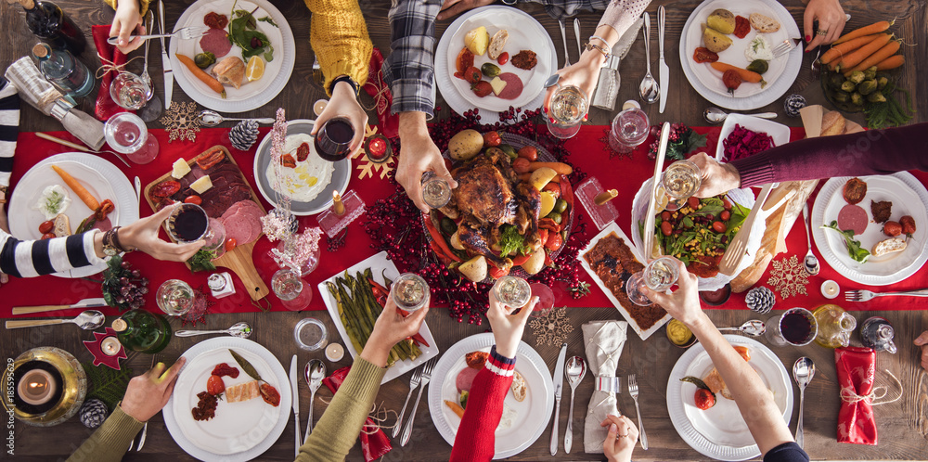
Every year, my family spends Christmas Day at my Nana’s house. It is a very special time spent playing games, opening presents, and eating delicious family recipes. It would not be Christmas Day without a juicy beef tenderloin, potatoes au gratin, brussels sprouts, bread rolls, and an assorted spread of small bites. The coffee table, positioned in the center where all the cousins gather to exchange gifts, is covered with chocolates, candies, cheese boards, and a variety of nuts to snack on. There is no denying that the food at Nana’s Christmas party has become an important component of the holiday tradition for my family, and I am sure that other families would say the same. While I always look forward to enjoying all of the fun recipes with the company of those I love, the holiday can be an especially challenging time when struggling with maintaining a healthy relationship with food.
Personally, I cannot resist the bowl of chocolates that sits on the coffee table next to the Christmas tree and find myself snacking on these particular treats throughout the visit. This is not part of my normal routine, and while I often enjoy chocolate, I would normally become satisfied after having a couple of pieces. Though every year the same thing occurs, I am sitting waiting for my turn to open my presents, watching others as they open theirs, with the chocolate bowl resting at my side. Besides the stomach ache that hits after the fact, my mind begins to wander. Suddenly, I am no longer present, making memories with my family; I am battling the feelings of shame and guilt that have consumed my mind as a result of ignoring my hunger cues and taking on an all-or-nothing mindset. Don’t get me wrong, eating more chocolate or any particular food during the holidays is completely normal and can be completely healthy. What is not healthy is when doing so leads to physical or mental discomfort and takes you away from the present into a battle with your own thoughts and emotions. I can personally work to shift my frame of thinking about the bowl of chocolates at my Nana’s Christmas party and practice making peace with food.
Ditch the All-or-Nothing Mindset
Routine can be difficult to maintain throughout the holiday season, which, for many people who struggle with intuitive eating, adds an extra stressor when faced with eating outside of the regular patterns they have created for themselves. Actively working to heal your relationship with all foods year-round will eliminate any fears or worries associated with eating throughout holiday festivities.
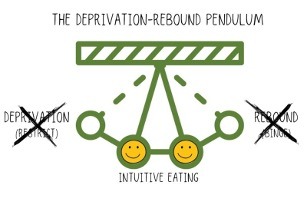
One of the forms of rebound eating depicted in Intuitive Eating is anticipation of food restriction. The authors describe a study done where children were given M&M’s and told that they could eat as many of the yellow candies as they wanted, but could not eat any of the red candies. This resulted in the children eating more of the red M&M’s than any other color, despite being told they couldn’t have them 2.
This study indicates how deprivation can trigger a response urging us to have an even stronger desire to eat a certain food because it is “forbidden” in our minds, and ultimately leading to an all-or-nothing mindset when presented with the food. An all-or-nothing mindset around food is when someone ends up binging or overeating a food that they have told themselves they cannot eat any other day, so they feel the need to frantically consume as much of it as possible while they have access to it.
Anticipation of food restriction is heightened for many people throughout the holiday season, especially for those who plan on binging on the foods they love now before it is forbidden according to the diet they choose to begin on January 1st.
Credit: https://nutritionbycarrie.com/2020/12/holiday-eating-pendulum.html
Action Plan
An all-or-nothing mindset around food can have detrimental psychological implications, negatively affecting individuals’ esteem as they feel shame and guilt for having indulged in a food that otherwise would have been “forbidden” from their diet. Viewing all foods from a neutral perspective is the first step in the right direction towards eliminating any heightened anxiety around specific foods. When food is labelled as “good” or “bad,” we often will give it the power to make us feel out of control. For instance, it would be harmful to tell myself that chocolate is “bad” for me and that I am only allowed to eat it at my Nana’s house because it is a special occasion. This causes what is called rebound eating, which was discussed above in the form of anticipating food restriction 2. Making chocolate, or any food, off limits will only lead to a harmful cycle of restriction and binging, as I feel the need to overeat it while it is available. Through actively practicing intuitive eating year-round by neutralizing foods, respecting our bodies’ needs, and mindfully incorporating all foods into our diets without restriction, we can work to eliminate any food noise that is heightened by the holidays.
Battling Holiday Triggers
Many aspects of the holidays can be triggering when dealing with food noise or the consuming feelings of guilt and anxiety stemming from an unhealthy relationship with food. In anticipation of upcoming holiday events and gatherings, here are some things to keep in mind that may help with making peace with food.
- Establish boundaries at gatherings
Every year at my Nana’s Christmas gathering, it is only a matter of time before someone comments on someone else’s food choices or preferences, points out another’s weight, or adds pressure to try certain foods or put more of it on their plates. Although coming from harmless intentions, these comments can be triggering, especially when already battling with your own mind. When faced with added pressures or outside noise influencing your thoughts and behaviors around food, this holiday season, remember:
- You have the right to say no! No matter how long someone spent in the kitchen making something or how excited they are for you to try it, you have the right to decline the offer respectfully.
- Set boundaries ahead of time that prioritize your needs and express your comfort level so that others can be mindful, aware, respectful, and refrain from saying anything that could be harmful.
- Be assertive and unafraid to stand up for yourself or educate family members and friends who may provide unsolicited advice or commentary at social gatherings.
2. Challenge food noise
Credit: https://www.nytimes.com/2023/06/21/well/eat/ozempic-food-noise.html
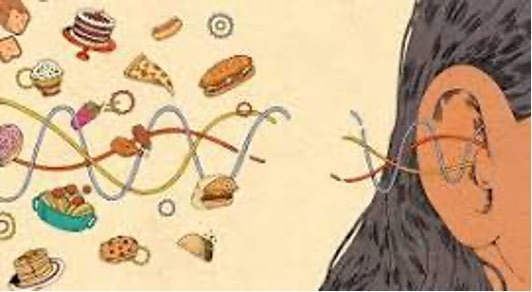
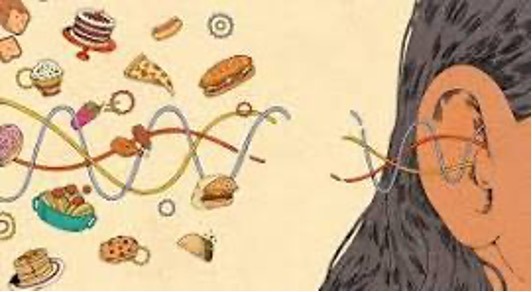
Food noise is the constant and mind-consuming voice in one’s head that will not turn off thoughts about food. Whether that be always wondering when and what your next meal will be, continuously feeling hungry, or feeling shame and guilt for what you have eaten. It is the result of the inability of the brain to signal to the body that you have met your hunger and satisfaction needs 1.
- Neutralize all foods
- Enjoy the foods that you love, surrounded by the people you love, without fear, by acknowledging that no foods are “bad.”
- Trust that your body knows what it needs and will communicate that to you. It’s your job to listen and provide it with the nourishment it needs.
- Shut down any feelings of guilt as a result of eating. Focus on the company, activities, and memories being made rather than giving food the power to dictate your experience.
3. Be kind to yourself
The Intuitive Eating book highlights the importance of respecting your body as a major component in becoming a successful intuitive eater. The authors define respecting your body as “treating it with dignity, while holding the intention of meeting its basic needs” (Tribole & Resche, 2020). Even when it feels challenging to be kind to yourself, you still deserve to fuel yourself properly and appreciate your body for all it allows you to experience. The following are some reminders for the holidays that will lead to self-respect and compassion.
- If you do overeat, be gentle with yourself and never punish your body by denying it of its needs as a result.
- Wear clothing you are comfortable in, and that makes you feel confident!
- Avoid weighing yourself if you know that it is a trigger for you.
- Stop comparing yourself, how much you are eating, or what you look like to others at social gatherings. Doing so will only ruin the experience and harm any positive self-talk.
4. Don’t compare your needs to those of others
Practice not comparing your needs to those of others. Make peace with understanding that not everyone’s plate will look the same. Remind yourself that everyone’s preferences and needs are individual and should not influence your own decisions around food.
- Don’t allow outside pressures to dictate what or how much you choose to eat this holiday season.
- Listen to your body and honor your hunger cues!
References
1. Food noise explained: Why you’re always thinking about eating. Tufts Medicine. (2025, August 26). https://www.tuftsmedicine.org/about-us/news/food-noise-explained-why-youre-always-thinking-about-eating
2. Tribole, E., & Resch, E. (2020). Intuitive eating (4th ed.). St. Martin’s Griffin.
Principle 3 of Intuitive Eating is “Make Peace with Food”. Tribole and Resch discuss the psychological implications of restriction as it leads to a vicious and mind-consuming cycle of overeating or binging as a result. This concept, as described in the book, is labelled as “Last Supper eating,” which is the mentality that stems from depriving oneself of a certain food 2. When they are then presented with that food and permit themselves to eat what would normally be forbidden, they take on an all-or-nothing mindset, resulting in eating it past the point of comfort.
Every year, my family spends Christmas Day at my Nana’s house. It is a very special time spent playing games, opening presents, and eating delicious family recipes. It would not be Christmas Day without a juicy beef tenderloin, potatoes au gratin, brussels sprouts, bread rolls, and an assorted spread of small bites. The coffee table, positioned in the center where all the cousins gather to exchange gifts, is covered with chocolates, candies, cheese boards, and a variety of nuts to snack on. There is no denying that the food at Nana’s Christmas party has become an important component of the holiday tradition for my family, and I am sure that other families would say the same. While I always look forward to enjoying all of the fun recipes with the company of those I love, the holiday can be an especially challenging time when struggling with maintaining a healthy relationship with food.
Personally, I cannot resist the bowl of chocolates that sits on the coffee table next to the Christmas tree and find myself snacking on these particular treats throughout the visit. This is not part of my normal routine, and while I often enjoy chocolate, I would normally become satisfied after having a couple of pieces. Though every year the same thing occurs, I am sitting waiting for my turn to open my presents, watching others as they open theirs, with the chocolate bowl resting at my side. Besides the stomach ache that hits after the fact, my mind begins to wander. Suddenly, I am no longer present, making memories with my family; I am battling the feelings of shame and guilt that have consumed my mind as a result of ignoring my hunger cues and taking on an all-or-nothing mindset. Don’t get me wrong, eating more chocolate or any particular food during the holidays is completely normal and can be completely healthy. What is not healthy is when doing so leads to physical or mental discomfort and takes you away from the present into a battle with your own thoughts and emotions. I can personally work to shift my frame of thinking about the bowl of chocolates at my Nana’s Christmas party and practice making peace with food.
Ditch the All-or-Nothing Mindset
Routine can be difficult to maintain throughout the holiday season, which, for many people who struggle with intuitive eating, adds an extra stressor when faced with eating outside of the regular patterns they have created for themselves. Actively working to heal your relationship with all foods year-round will eliminate any fears or worries associated with eating throughout holiday festivities.
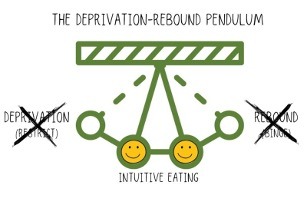
One of the forms of rebound eating depicted in Intuitive Eating is anticipation of food restriction. The authors describe a study done where children were given M&M’s and told that they could eat as many of the yellow candies as they wanted, but could not eat any of the red candies. This resulted in the children eating more of the red M&M’s than any other color, despite being told they couldn’t have them 2.
This study indicates how deprivation can trigger a response urging us to have an even stronger desire to eat a certain food because it is “forbidden” in our minds, and ultimately leading to an all-or-nothing mindset when presented with the food. An all-or-nothing mindset around food is when someone ends up binging or overeating a food that they have told themselves they cannot eat any other day, so they feel the need to frantically consume as much of it as possible while they have access to it.
Anticipation of food restriction is heightened for many people throughout the holiday season, especially for those who plan on binging on the foods they love now before it is forbidden according to the diet they choose to begin on January 1st.
Credit: https://nutritionbycarrie.com/2020/12/holiday-eating-pendulum.html
Action Plan
An all-or-nothing mindset around food can have detrimental psychological implications, negatively affecting individuals’ esteem as they feel shame and guilt for having indulged in a food that otherwise would have been “forbidden” from their diet. Viewing all foods from a neutral perspective is the first step in the right direction towards eliminating any heightened anxiety around specific foods. When food is labelled as “good” or “bad,” we often will give it the power to make us feel out of control. For instance, it would be harmful to tell myself that chocolate is “bad” for me and that I am only allowed to eat it at my Nana’s house because it is a special occasion. This causes what is called rebound eating, which was discussed above in the form of anticipating food restriction 2. Making chocolate, or any food, off limits will only lead to a harmful cycle of restriction and binging, as I feel the need to overeat it while it is available. Through actively practicing intuitive eating year-round by neutralizing foods, respecting our bodies’ needs, and mindfully incorporating all foods into our diets without restriction, we can work to eliminate any food noise that is heightened by the holidays.
Battling Holiday Triggers
Many aspects of the holidays can be triggering when dealing with food noise or the consuming feelings of guilt and anxiety stemming from an unhealthy relationship with food. In anticipation of upcoming holiday events and gatherings, here are some things to keep in mind that may help with making peace with food.
- Establish boundaries at gatherings
Every year at my Nana’s Christmas gathering, it is only a matter of time before someone comments on someone else’s food choices or preferences, points out another’s weight, or adds pressure to try certain foods or put more of it on their plates. Although coming from harmless intentions, these comments can be triggering, especially when already battling with your own mind. When faced with added pressures or outside noise influencing your thoughts and behaviors around food, this holiday season, remember:
- You have the right to say no! No matter how long someone spent in the kitchen making something or how excited they are for you to try it, you have the right to decline the offer respectfully.
- Set boundaries ahead of time that prioritize your needs and express your comfort level so that others can be mindful, aware, respectful, and refrain from saying anything that could be harmful.
- Be assertive and unafraid to stand up for yourself or educate family members and friends who may provide unsolicited advice or commentary at social gatherings.
2. Challenge food noise
Credit: https://www.nytimes.com/2023/06/21/well/eat/ozempic-food-noise.html
Food noise is the constant and mind-consuming voice in one’s head that will not turn off thoughts about food. Whether that be always wondering when and what your next meal will be, continuously feeling hungry, or feeling shame and guilt for what you have eaten. It is the result of the inability of the brain to signal to the body that you have met your hunger and satisfaction needs 1.
- Neutralize all foods
- Enjoy the foods that you love, surrounded by the people you love, without fear, by acknowledging that no foods are “bad.”
- Trust that your body knows what it needs and will communicate that to you. It’s your job to listen and provide it with the nourishment it needs.
- Shut down any feelings of guilt as a result of eating. Focus on the company, activities, and memories being made rather than giving food the power to dictate your experience.
3. Be kind to yourself
The Intuitive Eating book highlights the importance of respecting your body as a major component in becoming a successful intuitive eater. The authors define respecting your body as “treating it with dignity, while holding the intention of meeting its basic needs” (Tribole & Resche, 2020). Even when it feels challenging to be kind to yourself, you still deserve to fuel yourself properly and appreciate your body for all it allows you to experience. The following are some reminders for the holidays that will lead to self-respect and compassion.
- If you do overeat, be gentle with yourself and never punish your body by denying it of its needs as a result.
- Wear clothing you are comfortable in, and that makes you feel confident!
- Avoid weighing yourself if you know that it is a trigger for you.
- Stop comparing yourself, how much you are eating, or what you look like to others at social gatherings. Doing so will only ruin the experience and harm any positive self-talk.
4. Don’t compare your needs to those of others
Practice not comparing your needs to those of others. Make peace with understanding that not everyone’s plate will look the same. Remind yourself that everyone’s preferences and needs are individual and should not influence your own decisions around food.
- Don’t allow outside pressures to dictate what or how much you choose to eat this holiday season.
- Listen to your body and honor your hunger cues!
References
1. Food noise explained: Why you’re always thinking about eating. Tufts Medicine. (2025, August 26). https://www.tuftsmedicine.org/about-us/news/food-noise-explained-why-youre-always-thinking-about-eating
2. Tribole, E., & Resch, E. (2020). Intuitive eating (4th ed.). St. Martin’s Griffin.
